
Recent Posts


Related Posts

By Mimi Zilliacus, Founder and CEO, Genotype Health
I have spent most of my life inside health systems, first as a patient and later as someone trying to make those systems work better for other people. For a long time I kept those two parts of my life quite separate. Genotype Health is what happened when I finally let them meet.
Growing up with Noonan syndrome
I was born with Noonan syndrome, a rare genetic condition that can affect many parts of the body, including the heart, collagen production and connective tissue. Everyone’s experience of it is different. For me, it has meant a lifetime of hospitals, specialists, surgeries and treatments, along with chronic pain and health issues that need ongoing medication. For years there was also the long search for an autoimmune diagnosis, which anyone with a rare condition will recognise (I got half a diagnosis). You learn to tell your story again and again, to a new doctor in a new room, hoping that this time the pieces will fit together.
That experience taught me a lot about how health systems work, and about how they don’t. I learnt early that the system is not always designed around the person in the middle of it. I learnt to ask questions, to keep my own records and to speak up for myself when I needed to. I also learnt how much difference one good clinician can make. Someone who listens properly and explains what is going on in words you can understand can change the whole experience of being unwell.
A very personal decision
From a young age I knew that if I had children, there would be a 50% chance of passing Noonan syndrome on. I thought about that a great deal. Knowing what my own body had been through, I didn’t want to pass the same pain and health issues on to a child. So I made the choice not to have children.
I want to be clear that this was my decision, shaped by my own experience. It is not a judgement about anyone else’s choices, and it is certainly not a judgement on the worth or value of people living with complex health conditions and disability, even though I have grappled with feeling the need to prove my own worth for most of my life. People who live with genetic conditions, and families who learn they have one or that they are carriers, come to these decisions in very different ways. Many people with Noonan syndrome have children, and their families thrive. Some feel strongly that a condition needing lifelong care is simply part of life, and that it says nothing about the value or the joy of that life. Others make the choice I made. There is no single right answer, only the answer that is right for you.
What I do believe is that everyone deserves to make that choice with good information, in their own time and with real support. When I was younger, that support was hard to find, even though my sister became a genetic counsellor when I was in my early teens. Genetic counselling helps people understand what a result means for them and their family, yet many people still don’t know the profession exists or how it can help.
Today, people have far more options than I did. Screening before or during pregnancy can help people understand their chances of passing on certain conditions, and genetic counsellors can help them think through what that means. None of these options tell anyone what to do. They simply make sure that whatever someone decides, they are deciding with the full picture and with someone beside them.
Falling into public health
I didn’t set out to build a career in public health. To be honest, I didn’t know much about it. But when I stumbled into it, it felt as though it had been waiting for me. It brought together my interest in politics and how decisions get made, my natural habit of thinking in systems, and everything I had lived through as a patient. It also fed something I have felt for as long as I can remember: I have always wanted to work in a profession centred on caring for others, and to make a difference at a global level, or at least to make health care easier to reach for the people who need it most.
For much of my career I worked in places with very limited resources, trying to strengthen health systems for the communities with the least access. That work took me to Thailand and Papua New Guinea. Some of the hospitals I worked with didn’t have basic pain relief like paracetamol, or sutures to close a wound. In that setting, genetics felt like a world away. When a community doesn’t have reliable primary health care, advanced genetic testing isn’t the first priority, and it shouldn’t be.
Those years taught me more than any course could. I saw health workers achieve extraordinary things with very little, and I saw how often the biggest barriers to care had nothing to do with medicine. They were about distance, cost, language, trust and whether a system had been designed with a particular community in mind. Good health care, I came to believe, is as much about who it is built for, and the people working in it, as it is about the technology behind it.
Closer to home, I worked on establishing the Victorian Rural Generalist Program, which trains doctors to provide a broad range of care in rural communities. That work showed me that gaps in access are not only an overseas problem. Where you live in Australia still shapes the care you can get. Along the way I studied public health and change management, because I wanted to understand not just what needed to change, but how to make change last.
When my own health asked for attention
In early 2025 my health took a major turn, and I had to face the fact that I could no longer keep traipsing around the world pretending it was no big deal. It challenged my whole identity. I had spent years focused on improving health access for other people, choosing jobs based only on what I thought I could achieve in the role, while not always taking my own health as seriously as I should have. Many people who work in health will recognise that pattern.
That was hard to accept. People often talk about being “humbled” by health events, but that has never felt like the right word for me. Many of my symptoms had been there my whole life; I had just hidden them under a delusion of normalcy. I wasn’t humbled. I had a reality check. In the middle of that reality check, I also noticed a shift in how doctors were asking about, listening to and factoring in my genetics. My sister had always asked me why I didn’t work in genetics and patient advocacy, and last year I started thinking about that more seriously. But if I was going to work in genetics, it would have to be in a way that aligned with my passion for health equity.
Why now
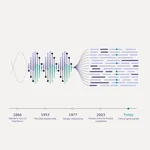
The timing mattered. Genetics is at a turning point. The cost of testing has fallen dramatically, and tests that were once expensive and slow are now far more affordable and quicker to return. You can read more about how far the field has come in a short history of genetic testing. Artificial intelligence is changing how genetic information is analysed, explained and shared. In Australia, new laws now stop life insurers from using genetic test results when deciding on cover, removing one of the biggest reasons people have held back from testing.
These changes bring real opportunities, and they also bring real risks. Much of the research behind today’s genetic testing has been done with people of European ancestry. That means people from other backgrounds are more likely to receive results that are hard to interpret, or to be offered tests that weren’t designed with them in mind. Many AI models are trained on that same unequal data, so they risk carrying the gap forward. If we aren’t careful, the benefits of genomics will flow mostly to the people who already have the best access to health care, and the gap will grow wider.
I wanted to be part of tipping the scales the other way.
For the first time, the two halves of my life pointed in the same direction. My lived experience of a genetic condition and my career working on access and equity were no longer separate stories. They had become one question: how do we make sure the promise of genomics reaches everyone, not just the people who are easiest to reach? That question is at the heart of our work on genomic equity.
Why Genotype Health exists
That is why I started Genotype Health. We are a profit-for-purpose genetic testing and counselling company, launching first in Australia, with plans to expand to Indonesia and Thailand and then to other countries in Southeast Asia and Africa. Our purpose is genomic equity. Alongside the company, I plan to build a non-profit arm that will work directly on health systems strengthening, partnering with others to improve access to genetic testing and research for those who need it most.
That purpose is written into our mission and vision, which guide every decision we make.
Our mission: We are on a mission to empower individuals and families through accessible, clinical-quality genetic testing, education, and genuine expert support — putting informed health decisions and precision care within reach for all.
Our vision: A world where genetic insights are met with expert knowledge, support, and guidance — enabling precision medical care, proactive health decisions, and informed family planning for every person who needs them.
In practice, that means a few things. It means offering screening panels designed with different populations in mind, so that more people receive results that are relevant to them. It means putting genetic counsellors at the heart of what we do, so nobody is left alone to make sense of a result. Genetic counselling isn’t only needed when you take a test; sometimes you need to revisit a decision years later, and our flexible genetic counselling consults allow you to do that. It means using technology thoughtfully, including Tara, our AI pre-test assistant, to help people understand their options before they test, with qualified people overseeing their care. And it means working alongside GPs, including rural GPs, so that genetic care fits into the relationships people already trust.
Everything we build is shaped by what I have learnt on both sides of the health system. I know what it is like to sit in a clinic waiting for someone to explain your own body to you. I also know how much can change when a system is designed well, and when the people in it have the time and the knowledge to help.
If you are thinking about genetic testing, for yourself or for your family, I hope you’ll find what you need with us: clear information, kind and qualified support, and the space to make the decision that is right for you. It’s what I would have wanted all those years ago, and it’s what I want for everyone now. A good place to start is our guide to everything you need to know about genetic testing and counselling.